
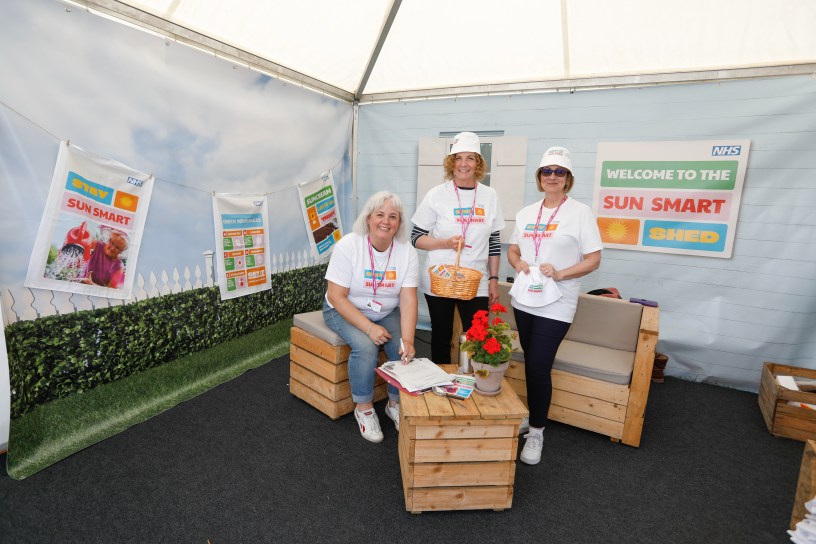
NHS staff from Greater Manchester Cancer Alliance spoke to visitors about how to stay safe in the sun at Tatton Flower Show.
Using a sun cream of SPF30 or above is one of the best things that people can do to reduce their chances of getting skin cancer.
The advice is to make sure you reapply it frequently throughout the day – even with products labelled ‘once a day’.
NHS staff gave out sun cream, hats and spoke to visitors about how to stay safe in the sun at Tatton. Visitors to the stand were also invited to guess how often sun cream needs to be reapplied. The poll was also carried out online.
Two thirds of those who took part correctly knew they needed to reapply sun cream every two hours. 14% thought they only needed to reapply sun cream twice a day and 20% thought they needed to reapply it every 20 minutes.
The sun in the UK is strong enough to cause skin damage between March and October. The NHS advice is to spend time in the shade between 11am and 3pm, and to take extra care with babies and small children, or if your skin is very pale.
Dr John Newsham, consultant dermatologist in Greater Manchester, said: “We wanted to talk to the public visiting Tatton about how to stay safe in the sun while enjoying outdoor activities such as gardening.
“While most people now know the importance of wearing a high sun cream of SPF 30 or above, not as many people realise the importance of regularly reapplying their sun cream. Our team has been raising awareness about this was well as giving out sun cream, hats and sharing advice on how to protect yourself from skin cancer by covering up with clothing and spending time in the shade between 11am and 3pm.”
Greater Manchester Cancer Alliance asked a series of questions during the Flower Show both in person to those at the event and via social media.
Overall, 100% of people surveyed knew they should try to stay out of the sun between 11am and 3pm. Meanwhile three quarters of those polled (74%) knew the minimum SPF you should look for on sun cream is 30 SPF.
The main cause of skin cancer is damage from UV rays, from being out in the sun or using sunbeds.
The NHS recommends that you check your skin regularly, keeping an eye out for moles that:
- change shape, or look uneven
- change colour, get darker or are made up of more than two colours
- start itching, crusting, flaking or bleeding
- get larger
If you notice any changes or are worried, your GP wants to see you.
For more information, visit: www.sun-smart.co.uk
Discover more from
Subscribe to get the latest posts sent to your email.
 news4trafford.co.uk