
Around one in 100 people in the UK are autistic, and for those living with the condition, any change to their daily routine can cause stress and anxiety.
It’s easy to see why the bustling environment of an airport, along with the security checks needed to keep everyone safe and the 24-hour nature of flight schedules, can lead to some trepidation for autistic travellers and their companions.
Today is World Autism Awareness Day, and to mark the occasion, Manchester Airport is sharing its top tips for autistic passengers and companions – along with guidance on the support available to you and where to find it.
Booking your trip
Many autistic people can find long journeys stressful, so picking a short-haul destination for a holiday may be best – and choosing a direct flight, rather than a connecting one, will help minimise any complication in getting from A to B. Manchester Airport has the most extensive route network of any airport in the UK outside London, with direct flights to more than 200 destinations.
If you or your travel companion struggles with crowded spaces, then try to avoid the busiest periods like the school summer holidays if you can. Some times of day are also busier than others – many think that booking an early morning flight will make for a quieter trip, but in fact, the period between 6am and 8am is one of the busiest times of day at an airport. The late morning and mid-afternoon are often the least busy times to fly.
When you book your flights, make sure to carefully consider where you’re going to sit to minimise the amount of time it will take you to get on and off the plane, and to maximise your personal space. Avoid selecting a window seat if this is likely to cause distress.
Planning your journey through the airport
Your list of packing essentials for your hand luggage may include a few extra items– you might find, for example, that earplugs or noise-cancelling headphones are a great way to help reduce stress levels in busier parts of the airport. Comfort items like a favourite stuffed toy may also help.
Given that so much of the stress of travel comes from the uncertainty of what to expect, you may find it beneficial to give an autistic companion a full run-through of the airport process before arriving, and a commentary throughout. A tick list can help them visualise the different stages like check-in, bag drop, security, and boarding, and create a sense of structure, which in turn reduces stress levels. A video journey guide is available on the Manchester Airport Website.
Support in the Airport
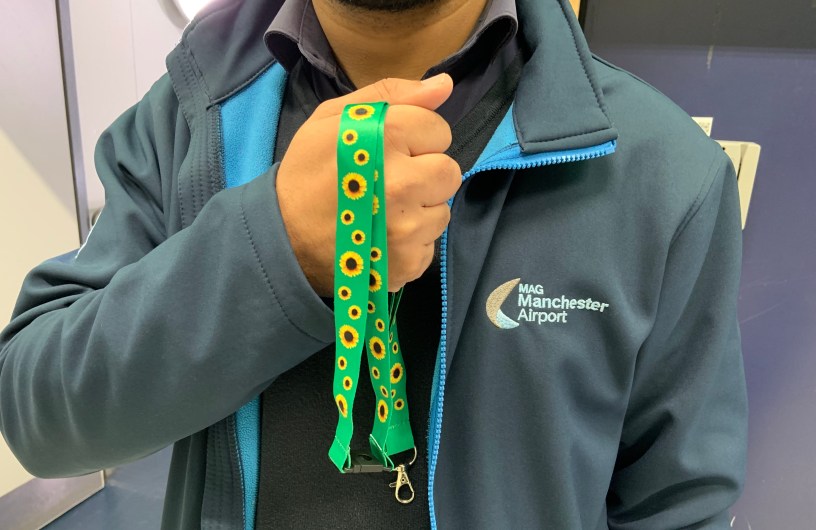
Manchester Airport recognises the Sunflower Lanyard scheme, and these lanyards are available free of charge at the Special Assistance desk in each terminal.
Wearing a Sunflower Lanyard will help staff recognise the wearer as someone who may need additional time or support. Airport colleagues are trained to recognise Sunflower Lanyards and act accordingly. Our Special Assistance team are available to offer any additional advice or support if required.
Airlines may offer the use of dedicated Assistance or Priority check-in desks and allow pre-boarding onto the aircraft. At Security and Immigration, passengers with non-visible disabilities can use the Assistance Lane even when travelling independently, which can reduce the wait time in these areas.
An option to bypass World Duty Free is available in each terminal, which some people may prefer to avoid sensory overload in these areas, which our Special Assistance team can arrange.
For those using Terminal 1, a dedicated Sunflower Room is available for those who need to break away from the noise, bright lights, and crowds of the main Departure Lounge. Airport staff will help direct you to this room if needed, which is located near the Airline Information Desk. Those travelling through Terminals 2 and 3 will also find quiet seating areas available.
Preparing for Security
Security checks have to be done consistently to ensure that they are effective – but security colleagues at Manchester Airport are given specific training in supporting passengers with non-visible disabilities who may find physical contact distressing.
This means that if a manual search is absolutely necessary, it can be conducted in private, with a chaperone, and security colleagues will allow extra time to explain to the passenger involved why they need to conduct the search, what it will involve, and answer any questions they may have.
Extra time to explain the process will also be allowed when conducting a search on a cabin bag belonging to someone with a non-visible disability. A Sunflower Lanyard is a great way to give an immediate visual cue to security colleagues that they need to take this approach.
The best way to minimise the chances of a manual search for either the passenger themselves or their cabin bag is to ensure compliance with aviation security regulations listed on the Gov.uk website.
If in any doubt over whether an item is permitted, err on the side of caution. Ensure that all of your pockets are emptied, outer layers of clothing are removed, and belts are taken off before going through the body scanners – as forgetting these steps is the most common reason for a manual search or pat-down being required.
Taking medication in hand luggage
If you’re carrying liquid medication over 100ml or sharp objects like needles or syringes, bring a prescription or doctor’s letter explaining why you require them, which can be presented to a security officer. A separate scan may be required on oversized liquids – but you are permitted to bring them through if they are prescribed to you.
Planning where to shop, eat and drink
If you have planned some time to relax in the Departure Lounge ahead of your flight, it helps to go in with a clear plan of where you want to go and what you want to do. If you’re planning to do some shopping, or to grab a bite to eat or something to drink, you can find in-depth guides on the Manchester Airport website, including food and drink menus. The airport lounges, Escape and 1903, offer a retreat from the hustle and bustle, with a buffet and bar service included in the price.
Avoid drinking alcohol if you are a nervous flyer – it could heighten your anxiety rather than lessen it and increase the risk of feeling unwell on the plane.
“We’re proud to connect people from across the north to the places they want to travel to, but we recognise for people with Autism that the thought of a busy airport might put them off booking that trip to their dream holiday destination or to see loved ones living far away. We’re determined that Autism and neurodivergence should not create a barrier to travel for anybody.
“We are rated as ‘Good’ by the Civil Aviation Authority on Accessibility, but we want to go further than that and we are constantly striving to improve the passenger experience including those requiring additional support. Our £1.3bn investment in Terminal 2 has been designed with this in mind.”
Jennifer Byrne-Smith – Customer Operations Director, Manchester Airport
Discover more from
Subscribe to get the latest posts sent to your email.
 news4trafford.co.uk