
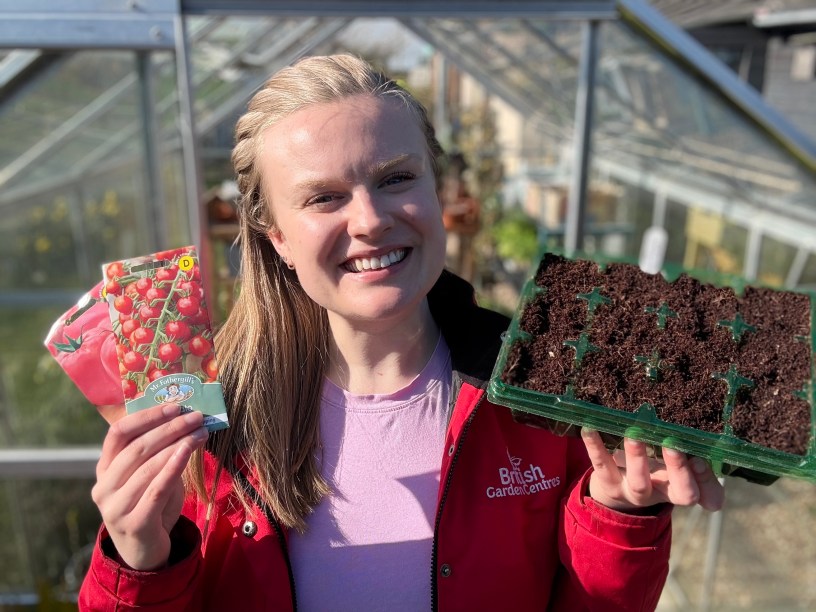
RHS National Gardening Week is fast approaching and taking place from April 28 to May 4, 2025.
This year, the theme is for new and beginner gardeners and aims to support them on their journey. Here at British Garden Centres, we are committed to making gardening accessible to all and have put together some easy tips and projects to help you grow your outdoor space with confidence, not just for the week but beyond.
Create a container garden
Container gardening is suitable for various types of plants, making it ideal for small spaces and a good choice for beginner gardeners. Container gardens are versatile and can be updated throughout the seasons for year-round colour or rearranged to change the garden’s appearance.
To start container gardening is easy; just group containers of different sizes together and plant to add colour. For shrubs and flowers, terracotta, wood, and fibreclay planters are recommended, but it is important to consider the depth of the container to accommodate the long roots. Shallower containers are suitable for cacti and succulents, while larger containers are appropriate for growing fruit and vegetables – there are containers to suit every plant.
Build a raised bed
Raised beds are an excellent way to start gardening and can transform your planting space, especially if you’re short on room. You can grow a variety of plants in a raised bed, including vegetables and soft fruits that thrive in this environment.
Elevating the soil improves drainage and helps the bed thaw out more quickly in the spring. Constructing raised beds is straightforward and doesn’t require special tools—just some treated wood, a screwdriver, and a saw.
Begin by picking the length you want and cutting several boards for the sides. Level the ground and remove any large weeds before placing the bed. Assemble the bed using corner brackets, fill it with nutrient-rich compost, and you’re ready to start planting!
Low-maintenance plants
Shrubs like Choisya, Skimmia Japonica, Euonymus, and Daphne are great for beginners due to their year-round colour and low maintenance. Perennials such as lavender, sedum, geraniums, and Rudbeckia require minimal care and attract wildlife, returning yearly. Wildflower gardens can be easily created with seeds available at garden centres, offering various colours and styles, including mixes like Ox-eye Daisy, Corn Poppy, Cornflower, and Corn Marigold. Simply scatter the seeds and rake them in for a low-maintenance garden.
Use climbing plants
Adding a trellis, arch, or obelisk to your landscape adds height and interest and improves plants’ access to sunlight and airflow. For instant impact and little effort, climbing plants can cover unsightly walls and fences, offering scent and colour. Clematis is perfect for small gardens, while climbing roses are best planted in containers in early spring. Climbing sweet peas provide delicate flowers and fragrance all summer, are easy to sow, and are perfect for the curious newbie gardener.
Grow your own
For beginners, starting a vegetable garden can be both exciting and rewarding. Some of the easiest vegetables to grow include radishes, which mature in just four weeks and can be sown directly into the ground or containers. Tomatoes, especially bush varieties like ‘Tumbling Tom’, are also ideal as they don’t require staking. Peas are another great option, needing only minimal support with a simple trellis. Lettuce and other salad leaves can be harvested continuously by picking leaves from the sides, making them perfect for a steady supply of fresh greens.
Make your own compost
A high-quality, nutritious compost will ensure that your plants remain strong and healthy. Producing your own compost from garden and food waste is not only cost-effective but also beneficial for your garden, and it’s easy to do! Compost enhances soil structure, retains moisture, and aids in better drainage in heavy soils, and you can do it at home with everyday waste.
Items suitable for home composting include grass cuttings, leaves, dead plants, clippings, fruit and vegetable scraps, coffee grounds, eggshells, and plain cardboard. By creating a compost pile, microorganisms will thrive and decompose the waste into compost. This can be done with a composter or as simply as constructing a bin using wooden pallets, turning the compost every 3-4 weeks for the best results.
Amy Stubbs, Project and Development Manager at British Garden Centres, said: “This National Gardening Week, planting outdoors doesn’t need to be daunting. At your local British Garden Centre, you can find everything you need to start your journey, along with staff who can help you along the way and become confident in your garden.”
British Garden Centres (BGC) is the UK’s largest family-owned garden centre group with 72 centres around the country. The group is owned and led by The Stubbs family, who also own and operate Woodthorpe Leisure Park in Lincolnshire.
Discover more from
Subscribe to get the latest posts sent to your email.
 news4trafford.co.uk