
Taxi and private hire licensees across Greater Manchester are being encouraged to complete a short, free online training course that could help them spot the signs that someone might be struggling – and even save a life.
The initiative is part of Shining a Light on Suicide, a campaign led by NHS Greater Manchester to break the stigma around suicide and make support easier to access. With more than 200 lives lost to suicide in the region each year, the message is clear: suicide prevention is everyone’s business.
Greater Manchester is home to over 18,500 licensed taxi and private hire drivers, and since launching the training, uptake has continued to grow. With thousands of daily interactions across the region, each one is an opportunity to make a difference.
Small conversations can have a big impact
Taxi and private hire drivers meet people in all sorts of situations, from regular customers to passengers they’ll only see once. These everyday interactions can sometimes be the moments when someone needs support the most.
That’s why licensing services and NHS Greater Manchester are working together to promote a free suicide awareness training course developed specifically for the trade by the Zero Suicide Alliance (ZSA).
The training takes just 10 minutes, is available online, and includes a certificate of completion. It helps drivers learn how to:
- Spot warning signs
- Ask supportive, direct questions
- Start a conversation with someone who may be in distress
- Signpost to further support
Take the training here: www.zerosuicidealliance.com/suicide-training-taxi
Dr Manisha Kumar, chief medical officer, NHS Greater Manchester said:
“At NHS Greater Manchester, we’re committed to preventing suicide and supporting people’s mental health. A big part of that is working in partnership with others across the city-region, including those outside traditional healthcare roles.
“Taxi and private hire drivers interact with a wide range of people every day in all sorts of circumstances; and this training offers a simple, effective way to help them feel more confident supporting someone who might be struggling. It’s one of many steps we’re taking to make suicide prevention part of everyday life.”
Dr Claire Iveson, consultant clinical psychologist and strategic lead, Zero Suicide Alliance said:
“We know talking about suicide can be difficult, but we believe that the more people who feel equipped and empowered to talk about suicide, the more chance there is for potentially life-saving conversations to happen.
“We launched our suicide awareness training for taxi and private hire drivers after working with various people including drivers with lived experiences to develop the course, and the feedback has been incredibly positive.
“We’re really pleased that NHS Greater Manchester is promoting this training.”
David Lawrie, director of the National Private Hire and Taxi Association said:
“Our industry could be considered an extension of the emergency services, as we play a vital role in supporting people, often in difficult situations. We regularly transport individuals of all ages, some of whom may have hidden vulnerabilities, including mental health issues, that only become clear during a conversation.
“For many people, taxi and private hire drivers can be their main form of social contact, which puts us in a unique position to spot any issues and point people towards the right support. We fully welcome this initiative as an extension of the safeguarding training already in place for all drivers. It’s free and shows our support for both the NHS and our communities.”
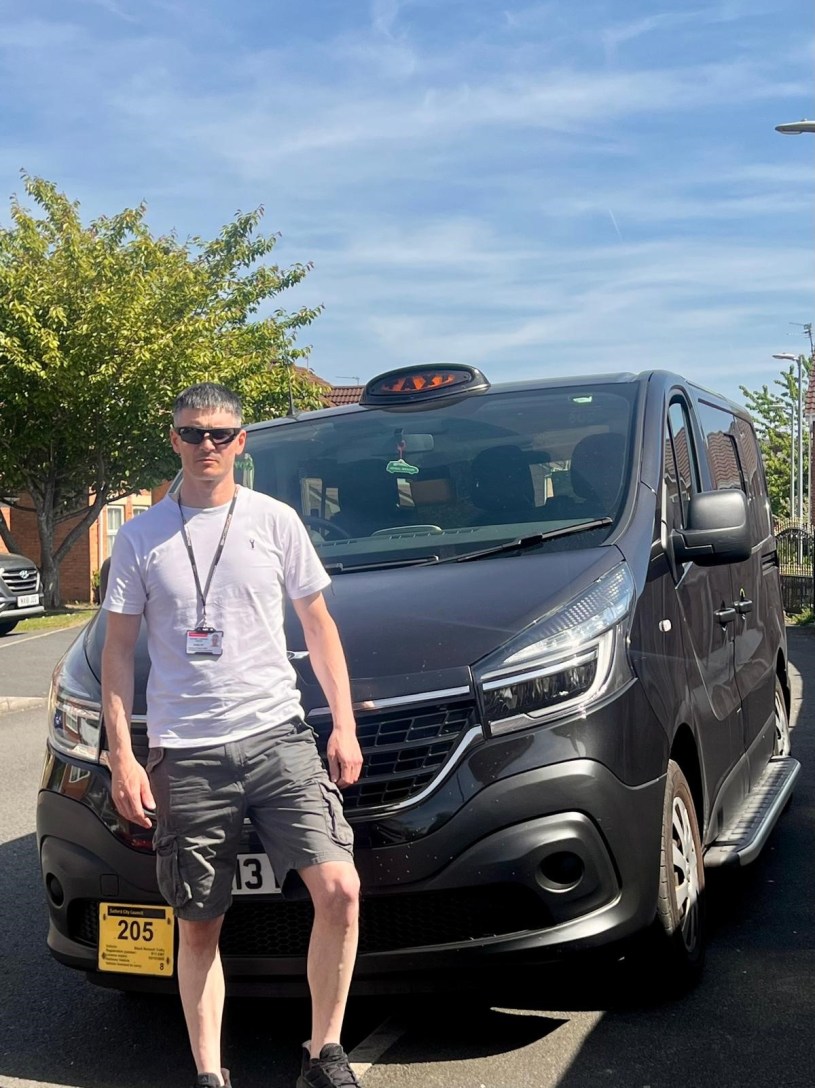
Rob Berrisford, driver and chair of Salford Unite Union Hackney Carriage Trade Association
Eccles taxi driver champions suicide awareness training for drivers
For Eccles-based taxi driver Rob, signing up for the Zero Suicide Alliance’s suicide prevention awareness training was more than just a box to tick; it was a chance to make a difference in a job that connects him with people from all walks of life.
Rob, 41, has been driving for 20 years, starting out in private hire before switching to a Hackney cab three years ago. “I made the move just after Covid restrictions started easing. My car needed replacing, and I’d always thought about changing over, so I went for it.”
He first got into the trade through family. “My partner’s dad used to run a firm, New Worsley Cars. He suggested I get my badge. A lot has changed since then. There’s more competition, lower rates per mile, and pressure to take on a wider range of work to make a living.” For Rob, that means doing contract work, hiring out cars, and running his airport transfer company – Excel Minibus Travel.
Rob mostly works in the Salford borough, doing daytime shifts on the rank with the occasional night job. “I’ve built up a base of regulars. People who head out at night and get a taxi back in the morning, or those who take the bus into town but like a cab home. I also get people doing their food shop who just want a lift back with their shopping. It’s a close-knit community, and good service matters. Offering a hand, being polite, and taking the time to chat – that’s what keeps people coming back.”
It’s that everyday connection with passengers that made the suicide prevention training feel so relevant. “I think we all need to be more aware and more present. We’re all too often glued to our phones and not really paying attention,” Rob says. “These days, people are under a lot of pressure – financially, emotionally, and mentally. We don’t always notice it because we’re caught up in our own thoughts and situations. That lack of interaction can really take a toll on someone who’s struggling.”
The training has already changed how Rob sees his role. “It’s mostly common sense, but it gives you the confidence to act if something feels off. It reminded me that even a small conversation can mean a lot to someone who’s having a tough time.”
He continues, “we spend time with people in those quiet in-between moments. I’ve had passengers who were quiet, withdrawn, and just not themselves. I’ve always wanted people to leave my cab feeling better than when they got in. A small chat and a smile might be enough to steer them in a better direction, or at least help them feel seen.”
Rob’s had moments where he sensed someone might be struggling. “Not in a big dramatic way, but you can tell. Now I feel more confident to respond, even if it’s just keeping a conversation going or offering a bit of reassurance. It’s not always about fixing things, just showing you care.”
His message to other drivers is simple: “do it. It only takes ten minutes – you’ll spend that scrolling on your phone without thinking. You never know when you might be the one in the right place at the right time to help someone. And surely that’s worth it.”
Outside of work, Rob keeps busy with his three children, plus two rabbits that became part of the family during the first Covid summer. He enjoys staying active with long walks, keeping fit, and spending time outdoors.
It’s not just for taxi drivers
While this training has been tailored for taxi and private hire drivers, anyone can take suicide awareness training. The Zero Suicide Alliance also offers general training modules for the public, professionals, and organisations.
Explore the full range of training at: www.zerosuicidealliance.com/training
Find help or give help
If you’re struggling or supporting someone who is, there’s help available:
- Greater Manchester Bereavement Service: www.greater-manchester-bereavement-service.org.uk. Support for anyone bereaved whether by suicide or other causes.
- Hub of Hope: www.hubofhope.co.uk. A free app to find local and national mental health support.
- Shining a Light on Suicide: Homepage – Shining a Light on Suicide. Offers resources and support for individuals affected by suicide.
Together, NHS Greater Manchester and partners hope to make the city-region a safer, more supportive place for everyone.
Discover more from
Subscribe to get the latest posts sent to your email.
 news4trafford.co.uk