
As the urgency to protect our natural environment grows, so does the movement towards rewilding our gardens.
As World Bee Day approaches on 20th May, British Garden Centres is your one-stop destination for everything you need to support bees and other pollinators in your garden.
With growing awareness of the importance of protecting our natural environment, rewilding gardens and creating pollinator-friendly spaces has never been more crucial. But how can you support our buzzing friends in your garden? We have some top tips to make your garden bee-friendly all year round.
Planting for bees
One of the most effective ways to support bees is by planting nectar-rich rich bee-friendly flowers. Your local garden centre is fully stocked with plants that bloom from early spring to late autumn, ensuring a continuous supply of nectar and pollen for beneficial insects to come and feast on.
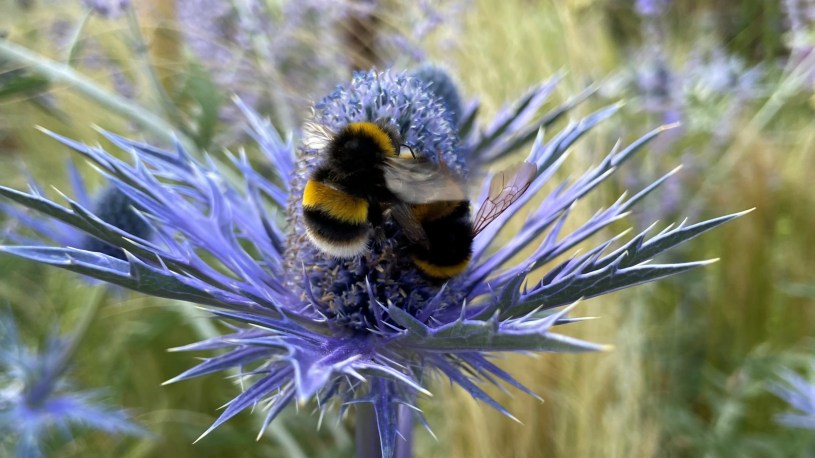
Why not try planting traditional favourites like lavender, eryngium, foxgloves, alliums, honeysuckle, and heather, which are particularly attractive to bees. Look out for Astrantia, poppies, buddleia, rudbeckia, sedum, and echinacea, which can be sown in borders and pots, providing vital food sources for pollinators all year round.
But it’s just not ornamental plants that will bring bees to your garden, fruit and vegetable plants will too, so if you’re more of a grow your own enthusiast, pollinators will love your vegetable patch too.
Bees are also drawn to the blossoms of these plants, and by growing beans, peas, apples, strawberries, blueberries, and herbs like thyme, rosemary, and chives, gardeners can provide additional foraging opportunities to support bees.
Whether you have a garden, small patio or balcony box, even the smallest space can be accessible to bees by planting in containers, window or balcony boxes.
Rewild your lawn
Another simple yet powerful step is to let your lawn go wild for World Bee Day. Campaigns like Plantlife’s “No Mow May” and Defra’s Bees’ Needs Week (14 to 20 July 2025) both encourage gardeners to let grass and wildflowers grow in their garden or verge, creating a natural habitat and feeding zone for bees.
Dandelions, clover, and buttercups are often dismissed as weeds but are important food plants for pollinators and allow bees to thrive. Even allowing a small patch of your lawn to grow wild can make a significant difference and is a simple step to help these insects for World Bee Day.
Sow wildflowers
Dedicating a portion of your garden to a wildflower meadow is a great way to enhance biodiversity for World Bee Day. You can sow wildflower seeds directly into the soil, containers, or even your lawn, creating an inviting habitat for bees and other wildlife.
Choosing a mix of nectar-rich native wildflowers will attract beneficial insects and provide colourful blooms throughout the summer, and there are plenty of mixes available in your local British Garden Centres store.
Now is the ideal time to plant wildflowers in late spring or early autumn in a sunny spot. Popular seeds that bees will love include oxeye daisies, cornflowers, poppies, and clover.
To sow, rake the soil, scatter about 1g of seeds per square metre, rake again and tread down to contact the soil, then water thoroughly. To protect them, consider using netting to deter birds whilst you are waiting for your wildflowers to establish.
Go organic
Another important step gardeners can take is to go organic for World Bee Day and beyond by avoiding using pesticides, herbicides, and chemical fertilisers.
These substances can be harmful to bees and other beneficial insects, so instead, look for natural pest control methods in the garden centre, or let nature take its course by encouraging birds, ladybirds and other wildlife that would eradicate pests such as caterpillars and aphids.
Provide a home
Bees need more than just food; they also need safe places to nest. Installing a bee hotel or nesting box is a simple project that can make a big impact, especially for solitary bees. Leaving patches of long grass, undisturbed soil, or dense hedges can also provide valuable nesting sites and bring bees to your garden year after year.
Bees also need water, especially during hot weather. A shallow dish filled with water and a few pebbles gives bees a safe place to drink and rest. Place the bee bath in a sheltered spot and refresh the water regularly.
Amy Stubbs, Project & Development Manager at British Garden Centres, said: “World Bee Day is a fantastic reminder that even small actions, like choosing nectar-rich plants or leaving a wild corner in your garden, can have a positive impact on our pollinating insects. The team at British Garden Centres is here to support everyone in creating gardens that are not only beautiful but also vital habitats for our wildlife and biodiversity.”
British Garden Centres (BGC) is the UK’s largest family-owned garden centre group with 73 centres around the country. The group is owned and led by the Stubbs family, who also own and operate Woodthorpe Leisure Park in Lincolnshire.
Discover more from
Subscribe to get the latest posts sent to your email.
 news4trafford.co.uk