
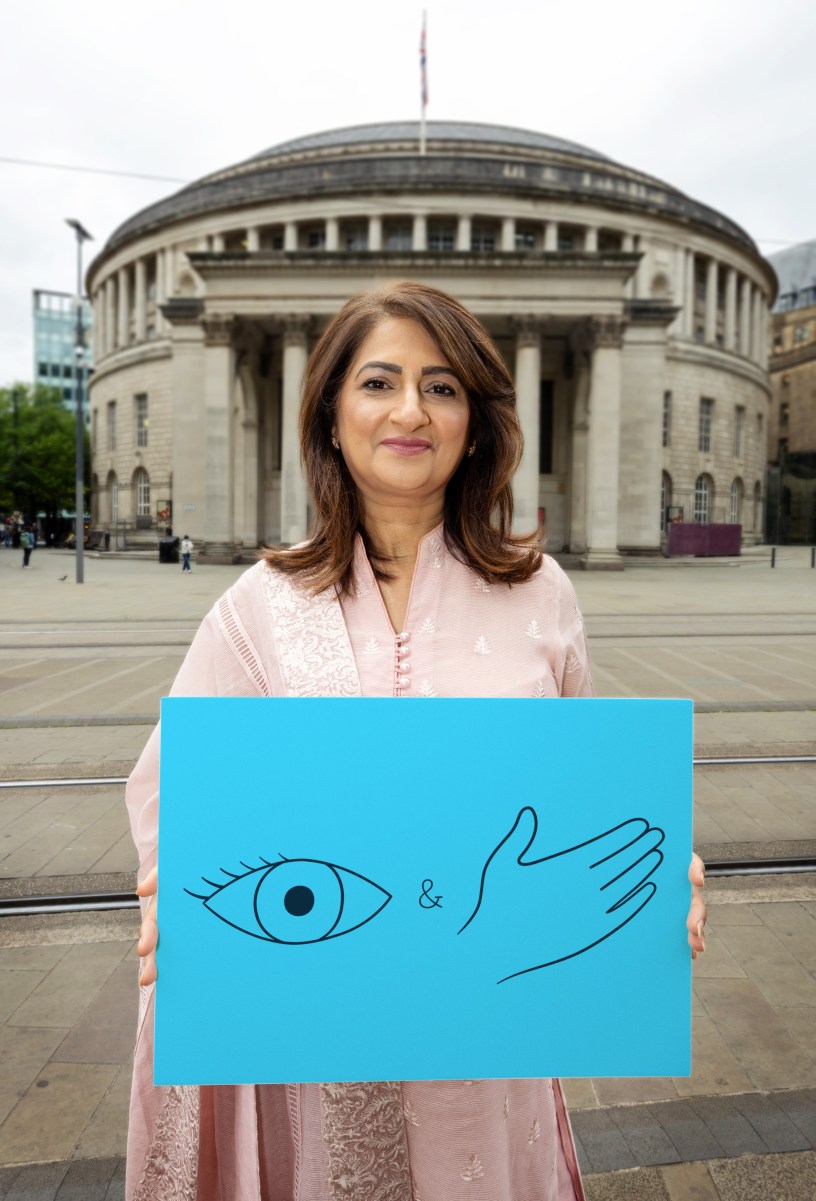
A Trafford woman is one of many from Greater Manchester to star in a new campaign by the NHS to raise awareness about the importance of checking your breasts or chest.
The campaign by Greater Manchester Cancer Alliance – part of the NHS – encourages people to “look and feel” every month and report any potential signs of breast cancer to their GP.
Its launch ties in with Breast Cancer Awareness Month in October and includes local faces as well as some Greater Manchester landmarks including Central Library in Manchester, the Imperial War Museum in Trafford, and Tandle Hill Park in Oldham.
The campaign particularly speaks to women who currently take longer to come to their GP with symptoms according to the latest data, including women aged 40 to 50, women aged 71 plus, and women from ethnic minorities.
Nabila Farooq, 58, from Trafford, who was successfully treated for breast cancer in 2006, was photographed in Manchester city centre. She said: “I would like women to be more aware of the signs and symptoms of breast cancer and make it a habit to check themselves regularly.
“I know it’s important to check your breasts regularly and I’m encouraging everyone in Greater Manchester – particularly Muslim women like me – to look and feel every month.”
Dr. Clare Garnsey, Clinical Lead for Breast Cancer and Associate Director at Greater Manchester Cancer Alliance, said: “The message we want to give out is clear. Most people survive breast cancer if treated at an early stage. Your GP wants to hear about any changes.”
Look out for the Look and Feel Every Month adverts on social media, on posters in community locations, and in the regional media.
Breast cancer is the most common type of cancer in the UK, so it’s important to check your breasts regularly and get to know these signs:
• a new lump or area of thickened tissue in either breast
• a change in size or shape of one of your breasts – it’s common for your breasts to be different sizes, but check for any changes that are not normal for you
• a change in the skin of your breast, such as dimpling, puckering, or redness, which may be harder to see on black or brown skin
• a bloody or clear nipple discharge that comes out without squeezing
• a change in your nipple, such as it turning inwards (inverted nipple) or a scaly or red nipple rash
• a lump or swelling in your armpit
If you notice a change that isn’t normal for you, you should always contact your GP.
For more information about how to check your breasts or chest, visit: How to check your breasts or chest – NHS.
Discover more from
Subscribe to get the latest posts sent to your email.
 news4trafford.co.uk