
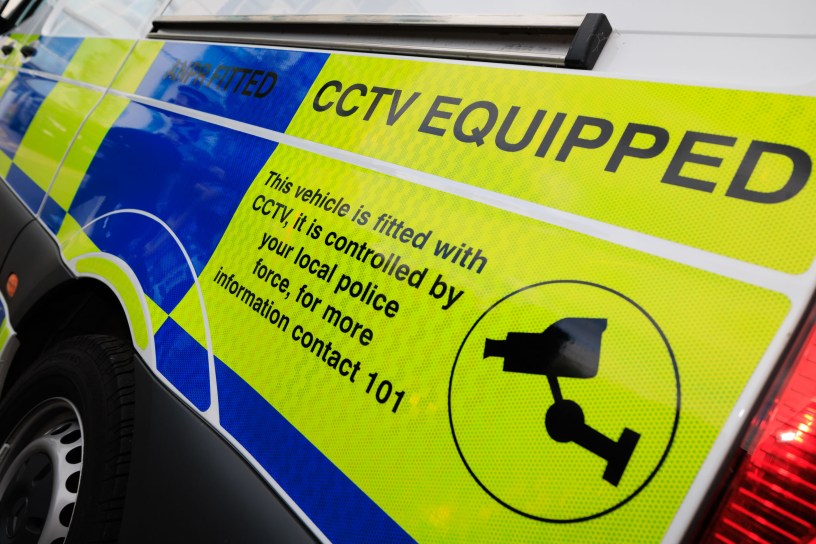
Greater Manchester Police are trialling Live Facial Recognition (LFR) cameras on vans in Sale Town Centre on 21 and 23 October.
The Home Office has supplied GMP with two LFR vans for use in areas where an operational need has been identified – not exclusively but in areas with crime issues and large footfall, as well as music and sporting events.
The cameras will focus on a specific area or crowd and detect faces compared to a pre-prepared watchlist, with an alert issued immediately if there is a match.
Police are saying there will be no recording facility and then claim all photos will be deleted within 24 hours; taking photos is a form of recording.
Live Facial Recognition used by police has to be done in a strict way under a thing called ‘Data Protection,’ and under Part 3 DPA 2018, extra care should be taken to:
- Ensure that processing of sensitive information is specific in nature and dependent on the specific law enforcement purpose.
- Clearly demonstrate why there are reasonably no less intrusive means of achieving the same purpose
- Clearly demonstrate how such processing will be effective in meeting the specified law enforcement purposes
LFR is used to reassure the public, identify people suspected of criminal activity, or those who have outstanding warrants. It is also used to protect the most vulnerable in our communities.
It can be used to locate missing persons or those suffering from difficulties that may mean they need to be located urgently to help them.
LFR is often used at large events or in busy areas, typically using mobile LFR vans. The vans have clear signs on the outside, and there is also signage in the area to inform people it is being operated.
There are also operational staff on the ground to monitor alerts and speak to the public if they have questions about the technology.
How does LFR work?
Each face that is found is mapped by software, taking measurements of facial features, such as the distance between the eyes and the length of the jawline, to create a unique set of biometric data.
This dataset is then compared to the watchlist. If the image is sufficiently similar to someone in its database, an alert is generated and sent to an engagement team, who will then speak to the person of interest, and a normal policing decision is made.
Also, when police or an authority use this technology, they have to tread carefully. For example, Met Police was told they must comply with human rights laws and GDPR, which should further reassure people.
Assistant Chief Constable Rick Jackson said: “At GMP, we use traditional policing tools but also embrace new and developing technology.
‘This is a really good example of police officers and technology working hand-in-hand and will bolster our Neighbourhood Policing operation.
“LFR can be used in a number of ways, including to prevent and detect crime, find wanted criminals, safeguard vulnerable people, and to protect people from harm.
“It will also free up officers to respond to emergencies, spend time patrolling within their communities, and investigating crime.
“It is a precise and targeted tool, only identifying specific individuals who have been added to a bespoke watchlist and will significantly speed up the process of identifying people at risk or wanted by police.
“It’s important that we dispel any myths around LFR and be open and transparent with members of the public – it is not a ‘mass surveillance’ tool, and law-abiding members of the public have nothing to fear if they see one of our vans.
“We are committed to using it responsibly, transparently, and in full compliance with the law.”
LFR has been successfully used by the Metropolitan Police and South Wales Police since 2017, first deployed in the UK at the Champions League final between Real Madrid and Juventus in Cardiff, and is being trialled at several forces including GMP, Hampshire, Essex, and Bedfordshire.
In August 2024, the use of LFR was endorsed by the Greater Manchester Independent Police Ethics Committee.
Discover more from
Subscribe to get the latest posts sent to your email.
 news4trafford.co.uk