
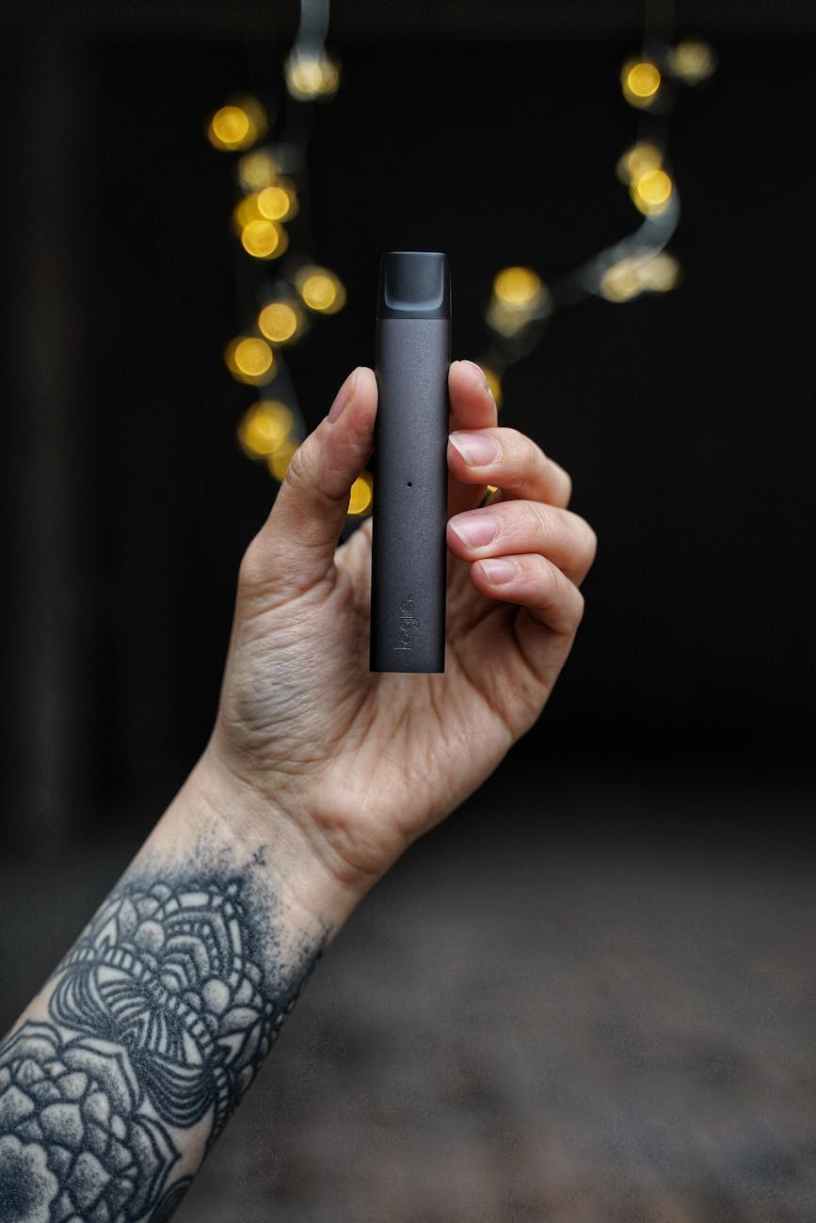
In the UK over 4.7 million adults now vape daily, vaping has become increasingly normalised in our culture despite the measurable physical risks and mental health costs.
Here Lee Hawker, Clinical Programs Director at The Cabin Group, Drug and Alcohol Rehab in Thailand and The Edge looks at how vaping creates addiction, the physical risks and how to reduce dependency.
For the past decade, vaping has been positioned as a clever and modern alternative to smoking, a technological workaround to an entrenched public health problem. In just a few years, the UK has become one of the most vape-saturated countries in Europe.
Disposable vapes now seem part of the landscape: dropped in parks, found in school bags, clutched at bus stops, left on café tables, or stuffed into the pockets of teenagers and adults alike. The normalization is so complete that even very young people identify “Blue Raspberry” or “Cherry Ice” not as sweets but as nicotine flavors.
Lee comments: “Because vaping has become so woven into British social habits, challenging it can feel strangely inappropriate, as though you are making an issue out of something harmless or culturally accepted.
“But as a clinician, I have seen increasing numbers of people with vape dependence. I can say with confidence that the public has significantly underestimated the risks involved. The widespread belief that vaping is a largely benign habit is not matched by what we are seeing in treatment settings or by emerging evidence about physical and psychological harm.
“For years, the dominant narrative has been simple: vaping is safer than smoking. That message was interpreted by many as evidence that vaping is essentially harmless. The difficulty is that “safer” was never meant to imply “safe;” it simply reflected that cigarette smoke contains thousands of toxins that vaping does not. What the public did not receive with equal clarity was the information that vaping introduces a different set of risks, many of which were unknown at the time the harm-reduction message was first promoted.
In reality, what has happened is far more nuanced: we did not replace smoking with a clean alternative; we replaced it with a behavior that carries its own health implications, some mild, some still emerging, and some potentially significant.
The Rise of Normalized Vaping in the UK
The UK’s rapid shift into mainstream vaping culture is well documented. NHS and Action on Smoking and Health (ASH) data shows that 4.7 million adults in Great Britain now vape daily, up from 3.2 million just three years earlier. This is the highest figure on record. Among young adults, the numbers are even more striking: 20.5% of 18–24-year-olds now vape, and the trend is accelerating rather than stabilizing.
Disposables have driven much of this change. In 2023, ASH reported that 69% of under-age vapers use disposable vapes, an astonishing shift compared with only a few years prior. Even younger groups show rising experimentation, with 7.2% of 11–17-year-olds now classified as current vapers.
While vaping has helped many smokers quit cigarettes, and that should be acknowledged, we also need to recognise three important realities that often get lost in public conversation. First, a substantial number of young adults who vape today never smoked in the first place.
Second, the vape devices used now are far stronger and more efficient at delivering nicotine than early e-cigarettes. And third, vaping is used far more frequently than smoking because it has none of the situational barriers that traditionally slowed cigarette consumption.
This means that the experience of vaping is not simply a milder version of smoking; it is a completely different behavioural pattern, one that lends itself to much higher frequency and, therefore, greater potential for dependence.
The Oversimplified “Better Than Smoking” Promise
Much public confusion arises from the early claim that vaping was “95% safer than smoking.” This figure originated from a scientific advisory group but was later widely criticized for being based on limited evidence and expert opinion rather than long-term studies.
The intention behind promoting vaping as a harm-reduction tool was well-meaning: reducing cigarette-related illness was, and remains, a public health priority. However, the issue is that this early reassurance was delivered at a time when the long-term effects of vaping were simply not known.
The nuance is important. The message was not dishonest; it was incomplete. At the time, researchers could only compare vaping to the very high toxicity of cigarettes.
What they could not do was speak confidently about the cumulative impact of inhaling heated chemicals, flavorings, metals, and ultrafine particles over many years. As new research emerges, it is increasingly clear that vaping is not a risk-free activity, and the early optimism did not fully account for this uncertainty.
Public behavior, however, was shaped by the reassurance rather than the nuance. Many people heard “safer” and interpreted it as “harmless,” creating a permissive social environment where vaping feels casual, inconsequential, and, for some, almost healthy by comparison. This has created an uphill battle when trying to correct public understanding.
How Vaping Creates Addiction: Nicotine + Behavioural Conditioning
Nicotine dependence develops through several interacting pathways.
1. Chemical dependency – Nicotine reaches the brain within seconds, triggering a dopamine response that encourages repetition. Modern disposables deliver nicotine at levels comparable to cigarettes, meaning the chemical reinforcement is strong and immediate.
2. Behavioural conditioning – This is where vaping diverges significantly from cigarettes. You can vape indoors, during work, in cars, in bed, and in almost any social environment without drawing attention. Because there is no smoke, smell, or ash, the act becomes frictionless.
Without natural stopping points, many users vape hundreds of times a day. The convenience of the device strengthens the habit loop far more quickly than traditional cigarettes.
3. Emotional reliance – This is the layer most people do not recognise until they are already struggling. Vaping becomes a tool for managing emotions, anxiety, boredom, loneliness, overstimulation, and social discomfort. Once nicotine becomes an emotional regulation mechanism, the dependency deepens, and stopping becomes not just a physical challenge but a psychological one.
Mental Health: The Hidden Costs We’re Not Talking About
Research is increasingly linking vaping with negative mental health outcomes, particularly among young adults. Nicotine increases baseline anxiety, disrupts mood regulation, and contributes to the cycle of agitation relieved only by another hit.
Many people confuse withdrawal symptoms with anxiety itself, believing their vape “calms them down,” when in reality it is relieving discomfort that the nicotine created in the first place.
Vaping also disrupts sleep by altering the brain’s arousal pathways, reducing sleep depth, increasing nighttime awakenings, and making it harder to achieve fully restorative rest. When combined with high stress, caffeine intake, and modern lifestyles, this produces the familiar pattern many young adults report: feeling exhausted but wired, emotionally reactive, and mentally foggy.
Physical Risks: The Part We Still Pretend Doesn’t Exist
Early marketing emphasized the absence of tar and carbon monoxide, which understandably led many people to assume vaping eliminated the health burden of smoking. But inhaling heated chemicals and metals is not a harmless act.
Studies now show that vape aerosol contains ultrafine particles capable of penetrating deep into the lungs, and trace metals like nickel and chromium have been detected in device emissions. Even short-term vaping affects blood vessel function, increasing cardiovascular strain.
Long-term data is still emerging, but early indicators are clear: vaping carries measurable physical risks, and the more frequently someone vapes, the more these risks accumulate.
A Clinician’s View: Who’s Getting Addicted? Two groups appear repeatedly in treatment settings.
- Young men often fall into vaping unintentionally. They begin socially, adopt the behaviour casually, and escalate because the device is always at hand. The absence of barriers makes vaping an almost continuous behaviour, and dependence forms quietly in the background.
- Older adults use vaping differently. For them, it often becomes an emotional tool, a way to manage distress, avoid discomfort, regulate mood, or create a sense of pause during stress. Once vaping becomes woven into emotional coping, reducing, or stopping becomes significantly harder.
How to Know if You Have a Problem
Signs of concern include:
- automatic reaching for your vape
- anxiety or irritability when you do not have it
- vaping in inappropriate situations
- struggling to reduce intake
- waking in the night to vape
- escalating to stronger devices
- panic when supplies run low
- hiding use from others
If several of these resonate, dependence may already be present.
How to Reduce Dependence
A few evidence-based strategies can help:
- Reduce frequency before reducing strength, to avoid withdrawal.
- Create no-vaping zones such as the car, bed, or workspace.
- Delay morning use, even by a short period.
- Track usage, as awareness alone reduces frequency.
- Identify emotional triggers, and learn alternative coping skills.
- Use tapering tools such as patches or lower-nicotine liquids.
When Professional Help Is Needed
If vaping is affecting your mood, health, relationships, or sense of control, it may be time to seek support. You do not need to wait for a crisis before reaching out. Early intervention is always easier than recovery from entrenched dependence.
Discover more from
Subscribe to get the latest posts sent to your email.
 news4trafford.co.uk