
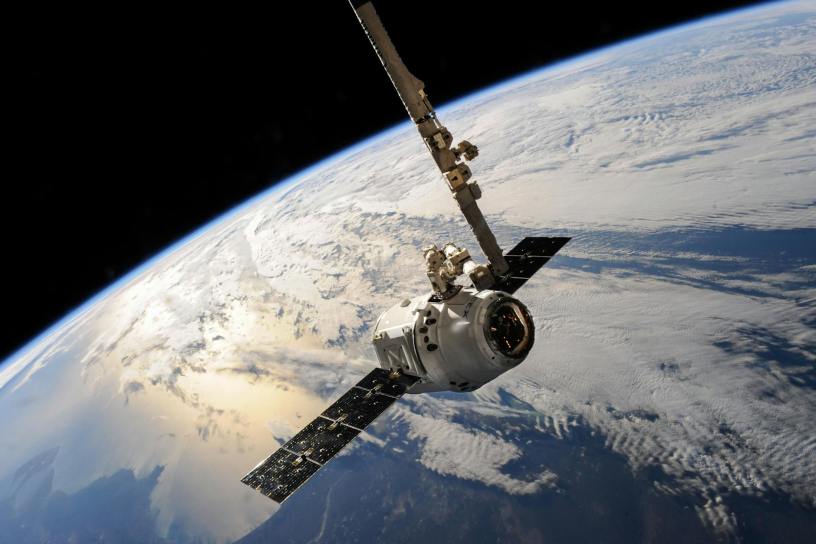
From 25 February, O2 customers with a compatible handset (no equipment needed) will be able to get a signal from a Starlink satellite. This new service will only kick in when you have no signal; the biggest users of the technology will be those in rural areas.
Satellite services are only available when you are out and about and will end the moment you are inside or even at a window. The coverage, as you can imagine, is gigantic, covering much of England and Wales, mostly in known areas with poor coverage or no coverage. Vodafone has satellite services, but they come from a different firm that apparently offers better data speeds.
Initially, the O2 satellite service will be much like 3G, so you will be able to talk, text, and use apps like WhatsApp and others. If you have an iPhone 13 or newer, you are in luck; however, you will need to have the latest update. If you are on Android, lots of the latest handsets, such as the Pixel 9 and 9a, 10 and 10a, along with the Samsung S25 series and others, will have the capability; you will need the latest updates.
Only O2 customers will have satellite services, and then at some point during this year, other virtual networks like Giffgaff and Tesco Mobile will have the service also. It is currently unknown at the time of publishing if a fee will be included to receive satellite services or if it will come as part of a bundle.
For the technically minded, the frequency will be set at 2.6GHz and, in some cases, could be increased to 3.1GHz. The beam will be very wide but focused on areas where there are the most complaints about poor signal and known not-spots.
The technology from the satellite in LEO (Low Earth Orbit) is the same as 5G mmWave (Millimeter Wave), using a beam, but with a difference. mmWave beamforming from antennas goes out around 200m and is at a much higher frequency, which we believe will start at 27GHz and end up nearer 300GHz before 6G is introduced.
Satellite beamforming is much weaker and spread out for miles, although we have read that Starlink is adding much more to their satellites, which could increase both signal and capacity very soon as mobile phone firms look to satellites for signal, giving people a choice and safety if no signal from a terrestrial mast can be found.
Discover more from
Subscribe to get the latest posts sent to your email.
 news4trafford.co.uk