
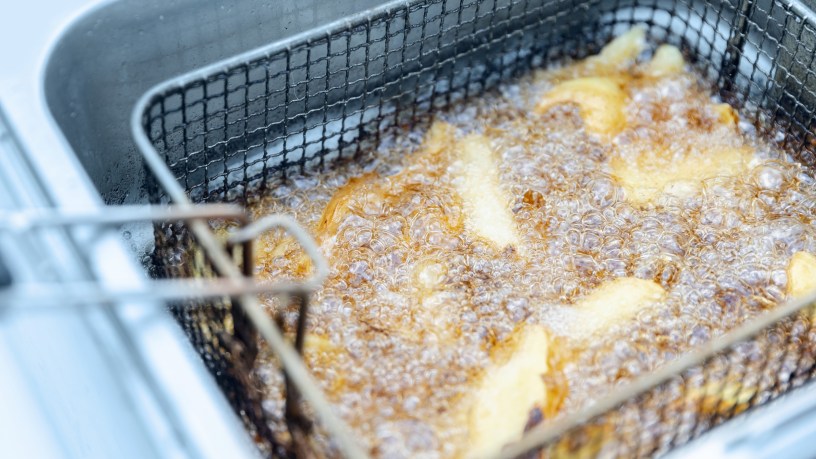
Though many Brits have discovered the ever-popular Air Fryer, deep fat fryers are still a common sight in kitchens across the UK. But are you using yours safely?
A deep fat fryer is a type of electrical kitchen appliance that is used to cook foods by submerging them in very hot oil. They are used in both commercial and domestic (at home) kitchens. Deep fat fryers help to create foods that are soft on the inside and crunchy on the outside, like fried chicken, chips, hash browns, battered fish, tempura, and doughnuts.
Dr. Richard Anderson, Learning Director at food safety experts High Speed Training, said: **“Using a deep fat fryer is safer than using a pan full of hot oil to fry foods, which can be incredibly hazardous, but deep fat fryers are one of the most dangerous appliances used in a kitchen.
“The presence of hot oil in deep fat fryers has the potential to cause serious burns or fires and presents a significant level of risk. For this reason, deep fat fryers must be used safely and properly.”
Here are some top tips on operating a deep fat fryer safely.
- Choose an oil with a high smoke point, such as vegetable or sunflower oil. These oils can be heated to a very high temperature before they begin to smoke or burn.
- Fill the deep fat fryer pan with oil to the correct level – usually around two-thirds full. Never fill the fryer more than the maximum level as the oil could bubble up and spill over the pan.
- Set the temperature according to the manufacturer’s instructions to ensure the oil reaches a correct, safe temperature. As a guide, set the fryer to 160 °C for low, 180 °C for moderate and 190 °C for high. Never heat the oil higher than this as it can catch fire.
- Gently lower the basket/pan into the hot oil and cover, and ensure it is not overloaded.
- Turn off the deep fat fryer and leave the oil to cool before draining or removing it. This may take longer than you think, so proceed with caution.
Dr. Anderson adds: “Never leave your deep fat fryer unattended when it’s full of hot oil, as it can overheat, ignite, or spill over in a matter of seconds. Also, keep all sources of water away from your deep fat fryer when it’s full of hot oil, as water and hot oil can cause serious burn injuries when mixed together. This includes even the smallest drops of water from wet foods or wet utensils.
It’s also important to remember to only use equipment and utensils that are intended for use in hot oil, such as stainless steel. Avoid copper or iron utensils, as these can cause the oil to foam.”
Cleaning and looking after your fryer is essential for maintaining good levels of safety and food hygiene. To ensure a clean and safe appliance, make sure you:
- Turn off the deep fat fryer, either at the wall or using the on/off control for gas appliances.
- Ensure the oil is drained thoroughly with no spills.
- Remove any loose food from the internal surfaces of the deep fat fryer then wash inside thoroughly using soap and water or a food-safe cleaner. Avoid abrasive cleaners that might scratch the appliance.
- Drain the deep fat fryer of any cleaning water, then rinse thoroughly and dry well, ensuring no water remains inside the fryer.
- Check the oil draining valve is closed and working properly.
Finally, Dr. Anderson shares some advice for if any burns or scalds do arise.
“Where possible, move the person who has been burned away from the source of heat to prevent further burn injuries to them or to you. Then, remove any loose clothing or jewelry near the burnt area of skin, but do not remove anything that has stuck to the skin. Use cool or lukewarm running water to cool the burn for at least 20 minutes. Avoid using ice, creams, or greasy substances.”
“Next, cover the burnt area of skin, ideally with a layer of cling film or a clean plastic bag, and raise the affected area to help reduce any swelling. Keep the casualty warm and comfortable, avoid touching the burnt area, and give them painkillers if needed.”
And finally, if the person has received a severe, deep burn, a chemical burn, or an electrical burn, contact the emergency services immediately for further medical care.
For more free resources, advice, and information, please visit the High Speed Training Hub.
Discover more from
Subscribe to get the latest posts sent to your email.
 news4trafford.co.uk