
Through a 10-year, £1.3bn investment programme, Terminal 2 has been transformed into a modern facility that had more than doubled in size and now handles more than 75% of all passengers using the UK’s global gateway in the North.
That means Terminal 1 – which first opened in 1962 and is joined in places to Terminal 3 – can now fully close.
Terminal 3 is now dedicated to Ryanair and is undergoing a revamp of its own, with work to expand it into space vacated through the closure of Terminal 1 well underway. This includes adding hundreds of new seats, a new bar called Sporting Chance that will open later this month and a new Italian restaurant.
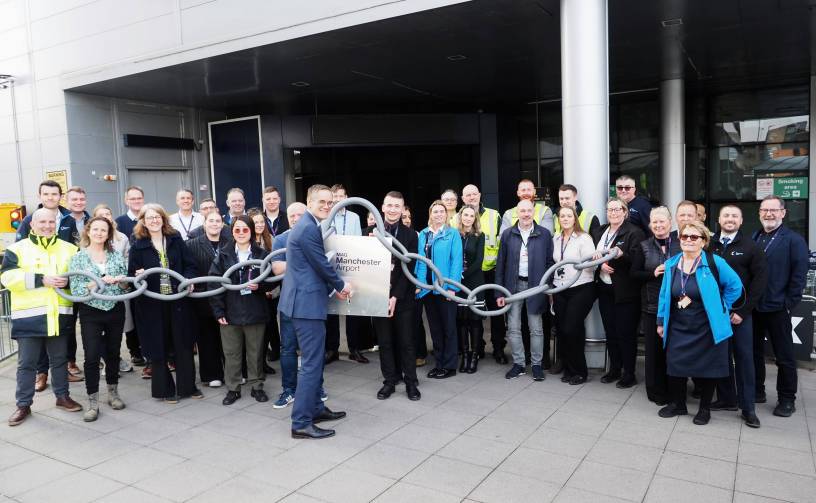
As part of the redesign, more than 2,000 signs have now been changed, formally signalling an end to Terminal 1’s 64-year lifespan. Managing Director Chris Woodroofe marked the milestone by wielding a ceremonial padlock.
Last year the airport served a record 32m passengers and the records are continuing to fall this year with last month being the airport’s busiest February on record. Just over 2.05m passengers flew into or out of Manchester Airport in February, up 2.3% on the same month in 2025.
Manchester Airport Managing Director Chris Woodroofe said:
“While this is the end of an era for Terminal 1, it’s really the start of a whole new chapter for Manchester Airport.
“We’re proud to connect the North to the world and our £1.3bn investment in Terminal 2 means that we’re now bigger and better than ever – serving our passengers in a setting that rivals any airport Terminal across Europe.
“It’s also allowing us to continue our growth and operate more flights to more destinations every single day. And we’ve achieved this at the same as making things more simple and straightforward for our passengers.
“All you have to remember now is that if you’re flying with Ryanair you’ll be flying form Terminal 3 and if you’re flying with anyone else, you’re going from Terminal 2.
“We talk a lot about the changes in Terminal 2 because what we’ve done there is amazing, but the changes in Terminal 3 will go far beyond changing the sign on the front door – although with over 2,000 signs to change that was quite a job!
“What we’re also doing is expanding and improving Terminal 3 by repurposing space in what was Terminal 1, so even though we’ve moved a number of airlines out, we’re still making Terminal 3 bigger and better.
“So as we move towards what will be another record-breaking year for us, I’m looking forward to welcoming passengers and hearing about their experiences of our new bigger, better and simpler operation.”
Timeline:
1962 – HRH the Duke of Edinburgh opens the new £2.7 million terminal. The terminal is truly innovative; the first in Europe to incorporate a ‘pier’ system, in which passengers remain under cover until ready to board the aircraft.
1989 – HRH the Princess of Wales opens the new Domestic Terminal. The new terminal includes dedicated check-in and car parking facilities.
1993 – Terminal 2 is opened by HRH the Duke of Edinburgh, doubling terminal capacity to around 20 million passengers a year.
1998 – Domestic Terminal becomes Terminal 3 and starts serving international passengers
2015 – Manchester Airport unveiled a 10 year transformation programme: MAN-TP
2021 – The first phase of the new Terminal 2 opens
2025 – The full footprint of new Terminal 2 opens to the public
The airport has also made things easier for passengers by renaming its car parks and other parking options with a numbering system to help people find their designated car park.
All the airport’s car parks and parking products – like Meet & Greet and Drop & Go – have now been allocated a ‘P number’ making it easier to follow signs and locate car parks.
The process started last year with several car parks around Terminal 2 being given P numbers, now all the pest of the airport’s car parks have them. The P numbers go from P1 to P16. As further car parks and other products are added they will be given P numbers too.
Discover more from
Subscribe to get the latest posts sent to your email.
 news4trafford.co.uk