
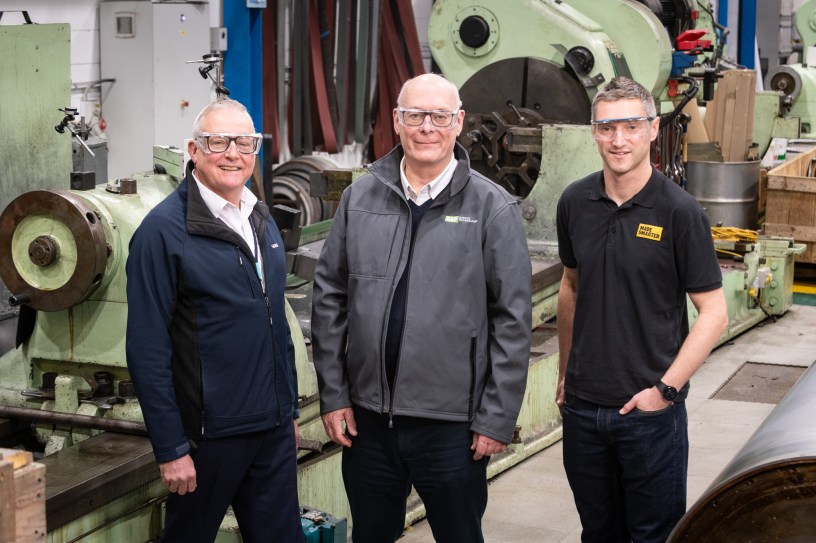
Small and medium-sized manufacturers remain strongly committed to investing in growth, but the accessibility of funding programmes increasingly influences whether projects proceed, according to BEP Surface Technologies.
Industry research published last year by Make UK found that 64% of manufacturers had plans to grow. However, BEP states that funding design, rather than ambition, is increasingly determining whether investment takes place.
The North West-based precision engineering firm has experienced both sides of the funding landscape. It is urging policymakers to simplify how support is delivered to SME manufacturers, based on its experiences across multiple programmes.
Only 1.5% of UK SMEs apply for bank loans, reflecting caution about external finance and the burden of securing it. In innovation funding, some competitive grant schemes report success rates as low as 2%, with high consultancy costs and complex application processes cited as key barriers to entry.
BEP states that the figures match its firsthand experience. Over the past 8 years, the company has completed a digital transformation project and is currently working on another, supported by Made Smarter, which includes digitalisation efforts and modernising legacy production equipment.
Made Smarter, the digital adoption programme, was launched in the North West in 2018 and is now available to SMEs across England. During the same period, BEP began but did not complete four separate government-backed funding applications under alternative competitive schemes for research and innovation.
Andrew McClusky, Managing Director of BEP Surface Technologies, said: “SMEs want to invest and grow. The issue isn’t ambition, it’s accessibility. If securing funding requires months of paperwork, consultancy costs and a low probability of success, many businesses simply won’t engage.”
“The key difference was not the size of the funding available; it was whether the process was practical for a business of our scale. Our experience with Made Smarter demonstrates how effective funding programmes can be when they are advisor-led and focused on implementation. The team at Made Smarter is simply excellent at understanding their clients and supporting them throughout the application process.”
He further explained: “We’ve completed one project, and another is underway with support that translated into real investment on our shop floor. Over the same period, we started several other applications that never reached delivery. The difference was not the size of the funding on offer; it was whether the process was workable for a business of our scale.”
BEP was among the early adopters of Made Smarter in the North West region. Support received enabled the company to accelerate digitalisation across operations and refurbish critical manufacturing assets, thereby extending capability and competitiveness.
The company emphasises that its comments are not intended to criticise government ambition but to highlight what drives uptake among SMEs.
“When funding is accessible, advisor-led and practical, SMEs engage. When it becomes an administrative exercise with uncertain outcomes, they disengage. That’s not a lack of willingness, it’s a question of design,” McClusky said.
With many UK manufacturers operating as SMEs and productivity is high on the national agenda, BEP believes the delivery model of funding programmes will determine whether growth ambitions translate into real investment.
“If policymakers want SMEs to modernise and scale, funding must reflect how businesses operate. Much more must be done to remove friction, so adoption follows. Add complexity and uptake falls,” McClusky added.
BEP says it hopes its experience encourages SME manufacturers that have earlier avoided funding routes to reassess opportunities where delivery models are practical and grounded in operational reality.
Discover more from
Subscribe to get the latest posts sent to your email.
 news4trafford.co.uk